
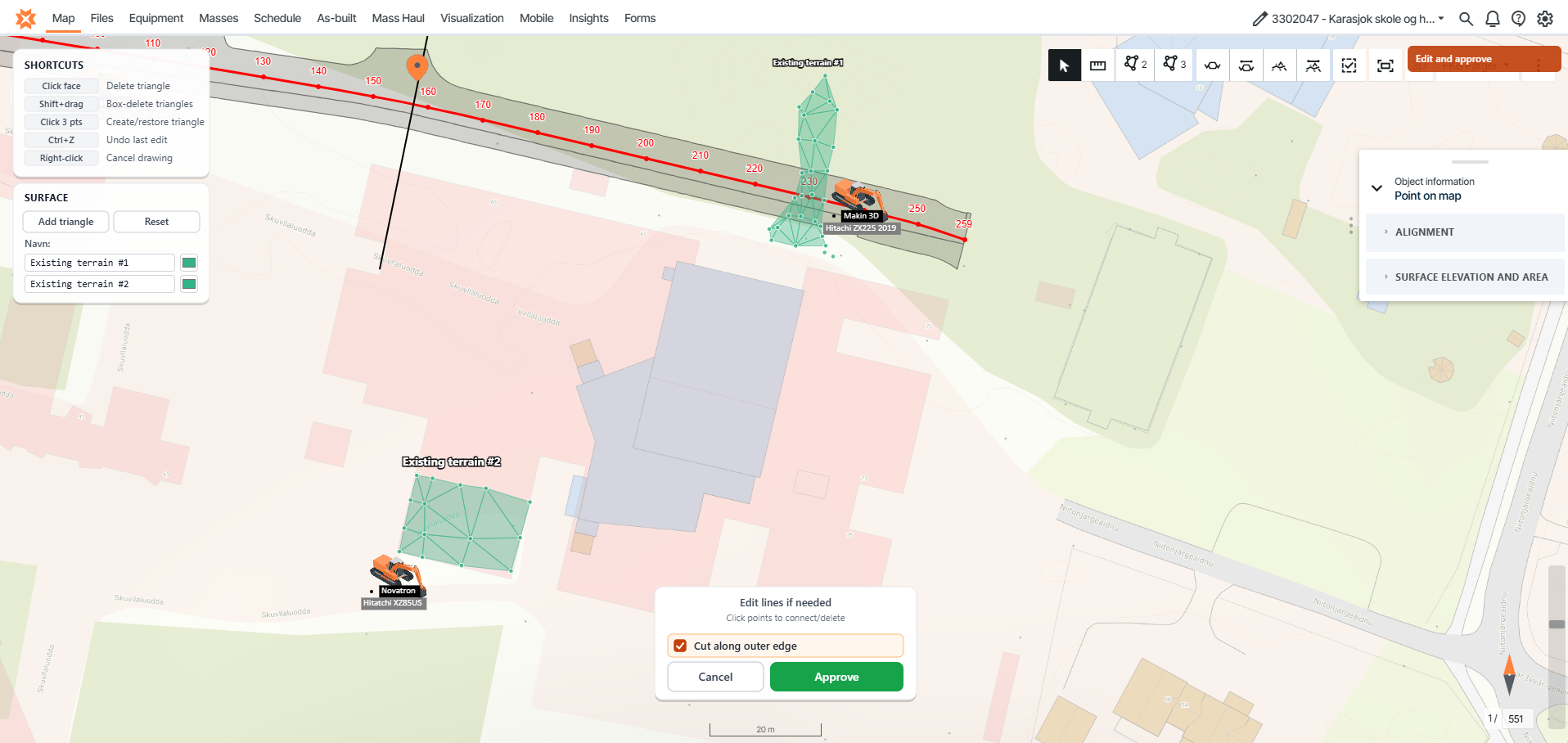
Construction projects rely on accurate field data, but turning that data into something useful can still involve a surprising amount of manual work.
Survey data is downloaded, transferred into CAD software, processed into lines and surfaces, combined with external data, and then turned into reports, maps and volume calculations. Once the work is complete, documentation often has to be prepared separately for project follow-up and invoicing.
Enhance+, developed by Atoma Nordic under the Skala Studios brand, is designed to simplify these workflows by bringing more of them directly into Infrakit. The aim is straightforward: automate repetitive steps and make workflows that previously required specialist CAD knowledge accessible through a few guided actions.
This is made possible by Infrakit’s open API and integration philosophy — giving developers like Atoma Nordic the foundation to build directly inside the platform contractors already use, rather than pulling data out of it.
From field data to engineering output
A typical survey workflow illustrates the difference.
Traditionally, a surveyor collects data on site and then moves through several separate steps: downloading the data, importing it into CAD software such as Civil 3D or NovaPoint, organising it, creating lines and surfaces, cleaning boundaries, adding external map layers, and finally producing reports and volume calculations.
Each handoff takes time and introduces another manual step into the process.
With Enhance+, much of that workflow can take place directly inside Infrakit.
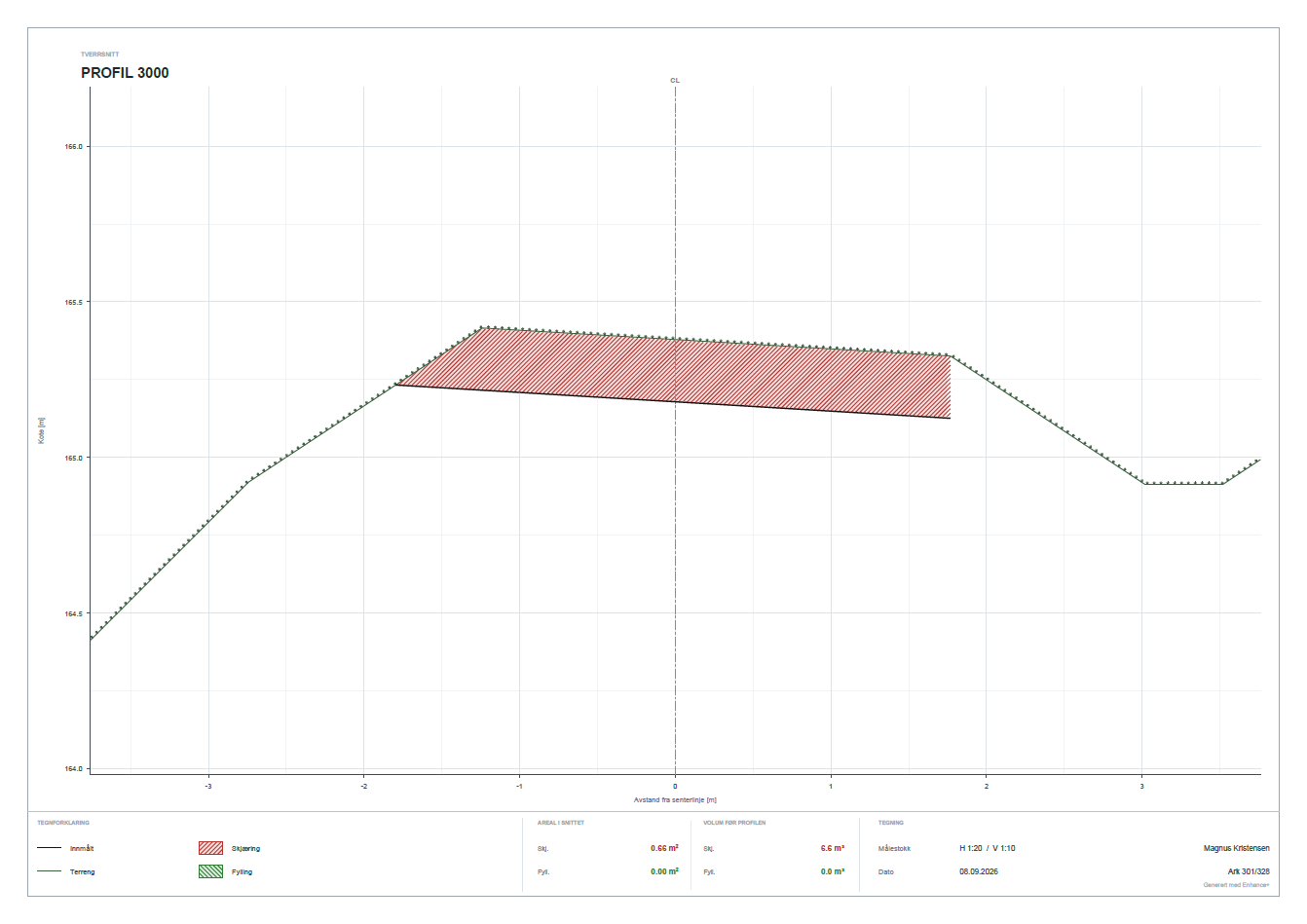
For volume calculations, for example, users can select the relevant top and bottom surfaces and generate the required output—including cross-sections, situation maps and volume calculations—in approximately five clicks.
“Select your top and bottom surface, hit Generate—and a complete report with cross-sections and situation maps is ready.”
The goal isn’t simply to make an existing CAD workflow faster. It is to make common project tasks accessible without requiring users to move constantly between different systems.
According to Atoma Nordic, users can become comfortable with many of the core Enhance+ workflows within an afternoon.
Built for the people working with project data
Surveyors are currently among the users who benefit most directly.
Linework generation, surface creation and report production are traditionally significant parts of the post-survey workflow. Automating these steps means surveyors can spend less time processing data after leaving the field.
But the information is useful beyond the surveying team.
Project managers and site managers can check project status and progress directly in Infrakit. Volume calculations, cross-sections and situation maps can be generated without opening separate CAD applications or waiting for someone with specialist software knowledge to prepare them.
For administration and invoicing teams, automatically generated documentation can also support the commercial side of a project by providing documentation of completed work that can accompany invoices.
The longer-term goal is to create workflows that provide value across the entire project organisation.
Removing manual steps between the field and Infrakit
Some workflows still begin with a surprisingly simple problem: getting field data into the right place.
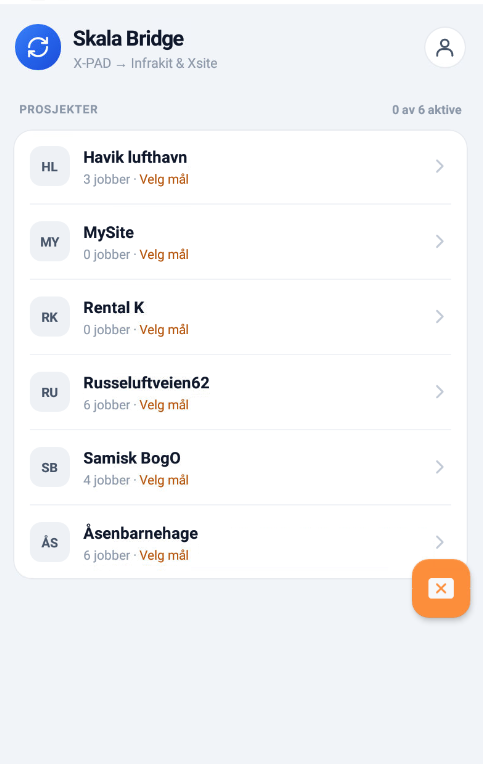
Atoma Nordic is currently testing Skala AutoSync, an integration designed specifically around the daily workflow of surveyors.
Previously, completing a survey could be followed by several manual steps: exporting the data, sharing the file and uploading it into the correct location in Infrakit.
With AutoSync, the ambition is to remove those steps entirely. Once the survey is completed, the data is synchronised directly into Infrakit.
The connection also works in the opposite direction. Users can select objects in Infrakit and send them directly to the GeoMax device without manually downloading and transferring files.
Skala AutoSync is currently in early testing, with the first customer already using the integration and providing feedback.
Other tools address similar friction points.
Automatic coordinate transformation detects whether uploaded files use local or global coordinates and transforms them to the correct position in Infrakit. Infrakit already supports WMS import, but finding the right layers and setting them up has traditionally required manual steps. Atoma Nordic has built ready-made templates and automated the process — users simply select the layer they need, such as FKB maps, and hit import. No copy-pasting, no hunting for links.
Together, these features are designed around the same principle: remove the small manual steps that accumulate throughout a working day.
From completed work to documentation
The same approach applies after the physical work has been carried out.
Documentation for mass transport can be a recurring administrative task on construction projects. Data needs to be gathered, organised into reports, sent to customers and tracked for invoicing.
Enhance+’s mass transport module automates much of that process.
Users can select the information they want to include and generate PDF or Word reports by truck, task or as a combined report. Customer details can be saved in templates, email text is pre-filled, files are automatically attached, and the documentation can be sent directly from Infrakit.
A simple status system makes it clear what has already been handled: sent items change from red to green, providing an immediate overview of what has and hasn’t yet been sent for invoicing.
Customers using the module currently report saving an estimated four to five hours per week on documentation.
The next step: from documentation to invoice
Atoma Nordic is now taking the same workflow one step further.
Automated invoice generation is under development, with the goal of connecting project data directly with Norwegian accounting systems.
Instead of manually compiling the documentation behind an invoice, users will be able to select a period—for example, all activity during July—categorise the relevant data by truck, area or volume, and generate the invoice together with its supporting documentation.
The same information can also provide a clearer internal view of the project: how much work has been completed, how areas and volumes are progressing, and where potential delays may be developing.
More than Enhance+
Enhance+ is one part of a broader product portfolio being developed by Atoma Nordic.
The team is also developing a CAD system plugin that connects directly with Infrakit, allowing users to create CAD elements and move information between the design environment and the cloud without first saving files locally.
One example is road construction. When a road structure is designed with specific material types, that information can be exported directly to Infrakit, making the materials available within the project workflow and helping ensure that trucks and site teams receive the relevant information.
The solution is already live in the Nordics.
The direct connection to Infrakit means project information stays in one place — no local files, no manual transfers, and no duplication between design and site.
Building around real customer workflows
The longer-term vision is closer collaboration between Atoma Nordic and Infrakit, with the potential for further co-development as the products evolve.
But the direction of that development is being shaped by something very practical: customer feedback.
Many of the tools being developed today originate from challenges raised directly by contractors—manual steps that take too long, information that has to be entered twice, or workflows that still depend on moving files between different systems.
For Atoma Nordic, those requests are an important part of the product roadmap.
And as Enhance+ becomes more deeply connected with Infrakit, the goal remains the same: identify where project teams are losing time to unnecessary manual work—and turn those workflows into a few simple steps.