
How to avoid rework in construction
Rework is the line item that never appears in the estimate but always shows up in the margin — and a lot of it is preventable.
Request a demo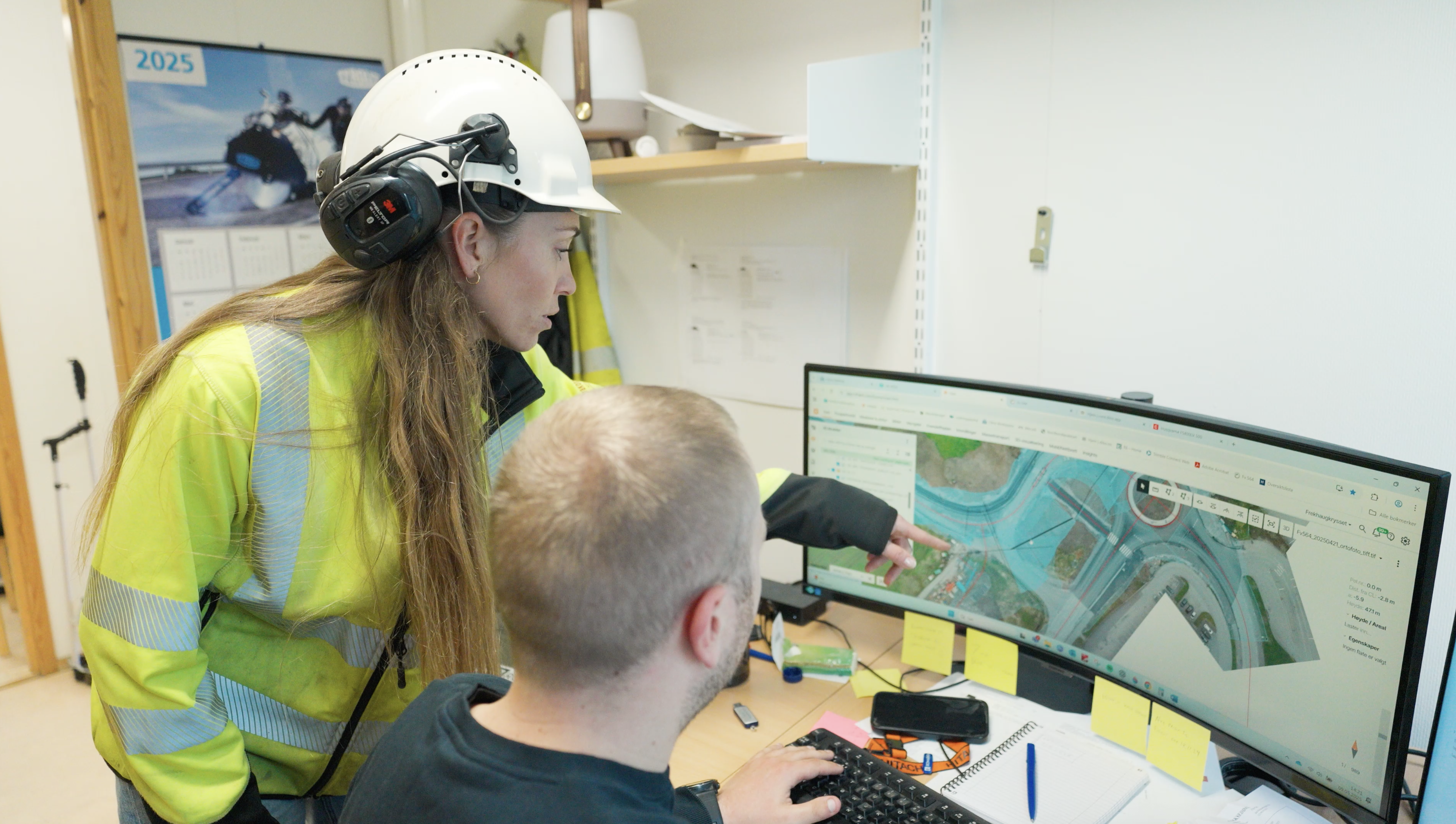
What rework really costs, where it actually comes from, and how infrastructure teams cut the most expensive kind — field-execution rework — by closing the gap between design intent and what the machine actually builds.
You've paid for rework before — everyone running infrastructure has. The subgrade that came back low. The drainage laid to a superseded revision. The section that fails compaction after the next layer is already down.
It comes out, it goes back in, and on infrastructure that usually means digging up something you'd already buried — turning a small miss into a five-figure problem.
The question isn't whether rework happens. It's where it starts, and how much you can stop before the bucket moves. Most of it traces back to the design office, but the field share is the part you control — and the expensive part once it's underground.
This article breaks down what rework really costs, where it actually comes from, and how infrastructure teams cut the most expensive kind — the field-execution kind — by closing the gap between design intent and what the machine actually builds.
Why a buried mistake is the expensive kind
On building construction, rework is painful but recoverable — you can usually get back to the work. Infrastructure is harder, for two reasons.
First, the work gets buried. Once drainage, conduits, or base layers are covered, verifying or fixing them means excavating — tens of thousands of euros plus the schedule hit. The cost of a buried error isn't the error; it's the dig to reach it.
Second, the phases build on each other. Earthwork, drainage, base, paving, structures — each layer sits on the one below. A subgrade cut 20 cm too deep doesn't just cost the backfill and recompaction. It can throw off every layer above it. Catch it while the bucket is still in the ground and it's a few seconds of correction. Catch it after paving and it's a different conversation.
That's why preventing rework in infrastructure isn't really about working more carefully. It's about making sure the right information reaches the machine, and that what the machine builds gets verified in real time — before the next layer goes on top.
The real cost of rework in construction
Nobody publishes their rework numbers, and everyone counts it differently — so be skeptical of any single figure. Rework rarely appears as its own line in the accounts; it hides inside labour, plant and material overruns. But the studies all point in the same direction.
The Construction Industry Institute puts rework at 2–20% of a project's contract amount, with most estimates clustering in the 5–9% range.
On a contract worth tens of millions, a few points is the difference between a good year and a write-off. And that's only the direct number — the redo itself. It doesn't account for the schedule you lose, the crews you hold up, or the phases stacking behind the delay.
By the time rework shows up in the margin, it has cost you more than the line item says. The more useful question isn't how much rework costs — it's where it comes from, and how much of it you can actually stop. See how Infrakit keeps design and as-built on one map →
Top 5 causes of rework in construction
If the field is where rework gets expensive, where does it actually start? Group the causes by origin and control, and a pattern emerges: only the first is a genuine decision error. The other four are failures of information timing.
1. Design errors and clashes. Incomplete drawings, unresolved conflicts between disciplines, and assumptions that only surface once work has begun. This is the single largest source of rework, and it's properly addressed upstream — through design coordination, clash detection, and model-based design — well before the excavator arrives.
2. Late design changes. On infrastructure projects, revisions aren't the exception; they're the norm. An alignment shifts to avoid a utility, or a change gets issued mid-shift. The revision itself is rarely the problem — the delay in reaching the field is. A crew working 90 minutes from a superseded model will rebuild that section through no fault of its own.
3. Miscommunication and bad data. Autodesk and FMI attribute a substantial share of rework to poor communication and inaccurate project data. Every hand-off — a verbal instruction, a marked-up PDF, a model left in an inbox — is an opportunity for the wrong version to win out.
4. Field-execution error. Over-excavation done "to be safe," missed grade, the wrong layer, or work that drifts out of tolerance because it goes unchecked until the following morning. Even skilled crews produce this when they're essentially working blind.
5. Verification that comes too late. When work goes wrong for an honest reason, the cost is determined less by the error than by when it's caught. Grade checked every 15–20 feet, or once a day, leaves long intervals where a deviation compounds — and then gets buried beneath the next layer.
The pattern points to a single lever. Design errors belong to the office; they're resolved before the first cut. But the four causes that follow all share the same failure mode: the right information didn't reach the right place at the right time.
Machine control closes that gap at the point of cut. When the blade knows its position continuously, grade cannot drift undetected for a shift. When as-built data is captured in real time, verification doesn't wait until morning — or until the next layer is down. The interval between error and correction collapses from hours to seconds.
See where rework is coming from on your project
Get the current design to every machine and bring as-built verification onto one real-time map — so deviations surface while the work is still open, not three layers later.
"We were using up to five different platforms just to push models and pull as-built data. It was messy and cost us hours every week."
Kristen Petillon Machine Control & Automation · AF Gruppen


Closing the gaps where mistakes get built
The machine can hit grade to the centimeter and the design can be right, yet rework still happens — because of what's around the machine, not the machine itself. Each fix below closes one of those gaps, and none asks the crew to work harder.
A single source of truth, pushed to every machine. When models go out through several manufacturer portals, you can't be sure which machine has which version — and on a busy shift, one ends up running an old model. Upload the design once, it goes to every machine automatically whatever the brand, and one screen shows which version each is on. Files convert to each manufacturer's format automatically, so what reaches the cab matches what left the design office.
Live grade guidance in the cab. Without it, operators dig a little past grade to be safe — because putting material back costs more than taking too much out. That "safe" margin is rework by another name. With machine control, the operator sees exactly where grade is and stops there, so the second pass never happens.
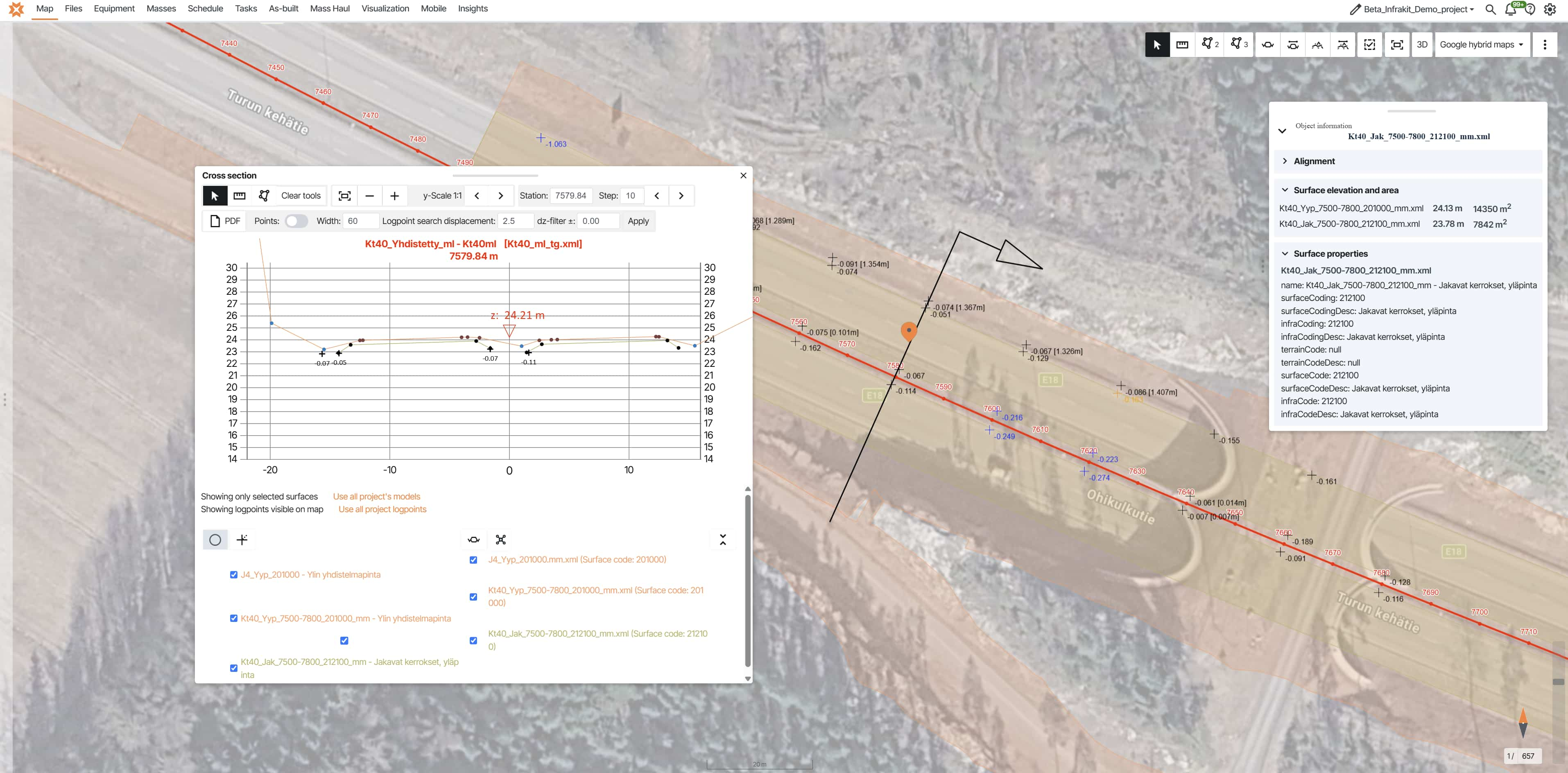
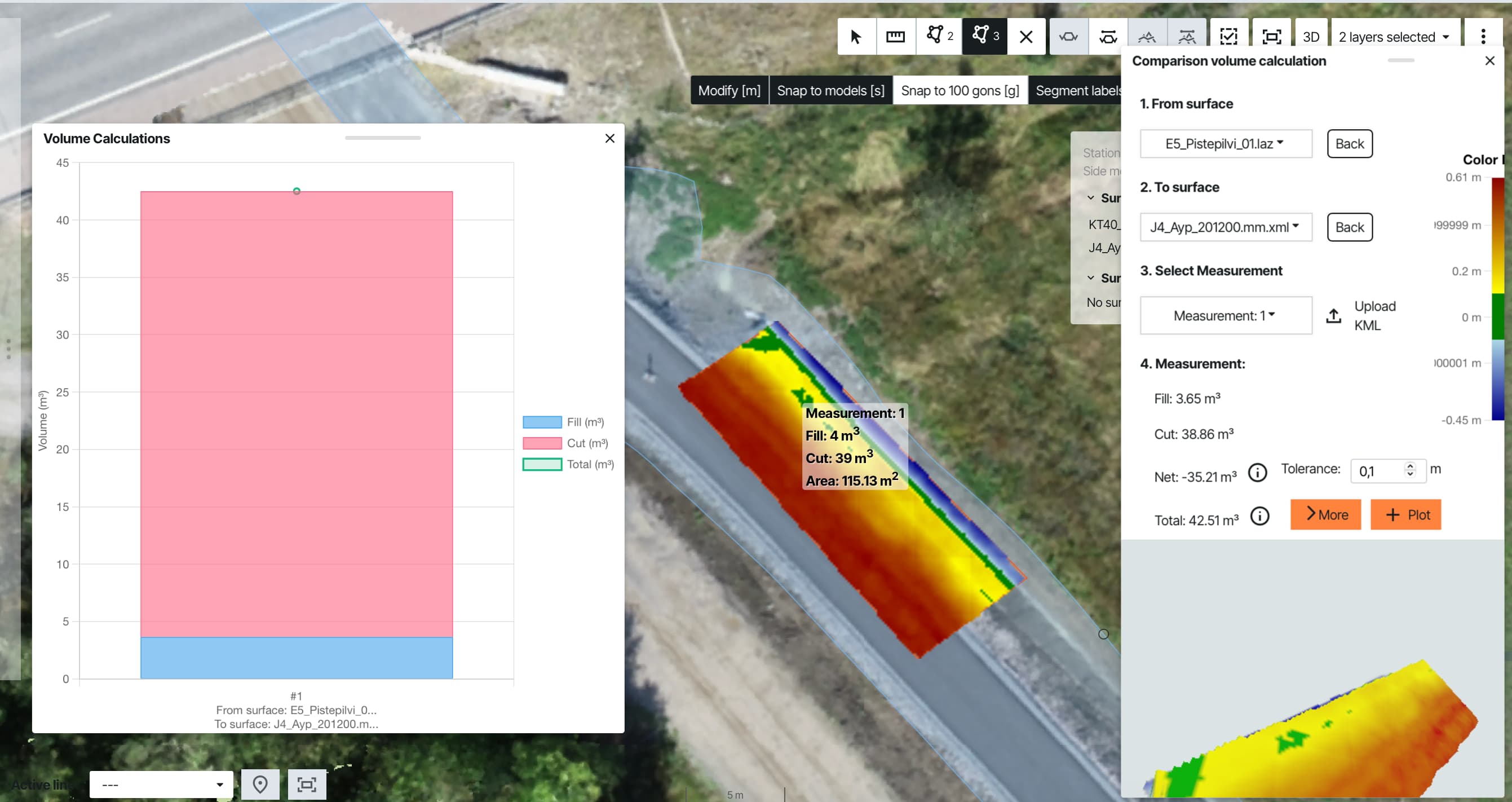
Continuous verification on one map. Manual checks happen occasionally, after the fact — so by the time a survey flags a problem, the layer may already be covered. When as-built data comes in continuously and lands on the same map as the design, problems show up while the work is still open. The same setup catches design mistakes that slipped review: a grade that won't tie in, or a real utility clash, shows up the day you hit it.
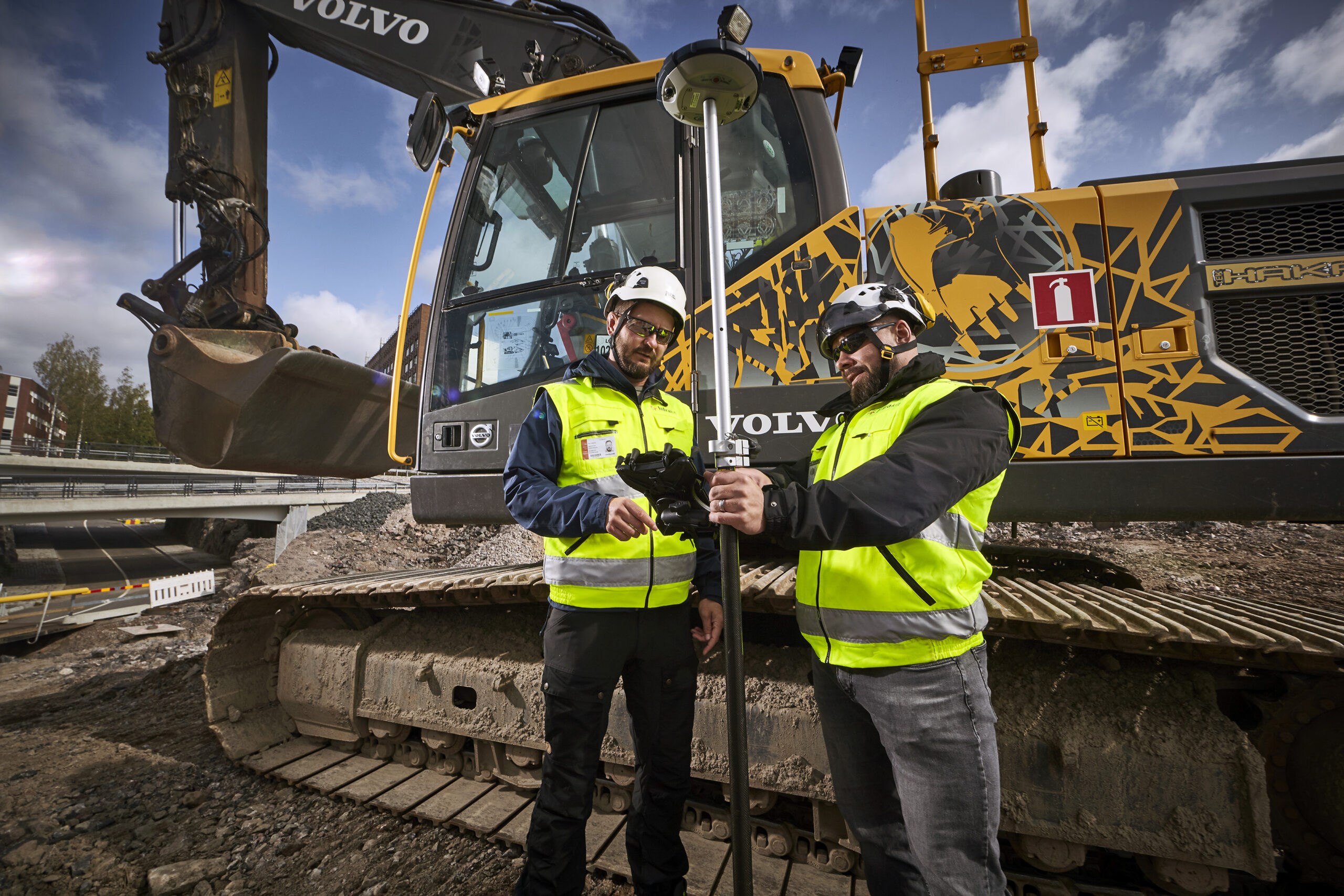
Calibration that checks itself. Accuracy drifts as a machine wears, and the display can still show grade while the bucket sits a few centimeters off. Automated calibration handles this — the machine measures a known point, the system logs it and warns you if it has drifted past tolerance. As PEAB describes it on the E6 project: "All the machine has to do is measure a known point. Then it saves the history and gives a warning if it is outside the accuracy requirement."
An as-built record that outlasts the dig. Once it's buried, the as-built record is your only proof of what's down there. When the machine itself records that it dug to grade — points coded correctly, in the right layer — you get a traceable record that holds up in audits and warranty claims years later. As Veidekke's Jan Steinar Stein puts it: "We automatically receive geometric controls done by the machine operators, who code the points correctly and measure in the correct layer of the model."
None of this replaces good design coordination upstream. What it does is close the field-side gaps that turn correct designs into rework — and by getting design changes to the machine fast, it also shrinks the biggest hidden category: rework blamed on design that really happened because the change reached the field too late.
"We avoid a lot of mistakes every day by being confident that the machines have the right basis."
Terje Glad BIM Manager · VeidekkeClose the gap between design and what gets built
One upload to every machine. Continuous as-built on one map. Calibration that flags drift before it reaches the ground.
The payoff on real projects
The teams that cut rework the most made the current design reach the machine reliably, and made verification continuous. The benefit shows up in two places: fewer redo cycles, and a schedule that holds.
The change that mattered was catching quality issues as they happened rather than finding them later — a real-time correction instead of a redo.
"There is no need to travel 35 kilometers for every little thing when I can just check it from my PC screen at the office. I can see in real-time how the project is progressing."
Jussi Laamanen Quality Manager · YIT Rakennus OyWith distribution and data collection unified, the version errors that breed rework had fewer places to hide.
Read more about AF Gruppen's E39 project →"If you manage machine control on large civil projects, especially with mixed fleets, this setup will save you time, reduce errors, and simplify your life."
Kristen Petillon Machine Control & Automation · AF GruppenColas Hungary made Infrakit the shared, map-based platform tying BIM, machine control and site reporting together. On road rehabilitation, quality gains were measurable and verified by data; on utility work, crews located buried structures faster and documentation kept pace with excavation — reducing the risk of a re-dig.
The financial logic across all three is the same. Rework that never happens protects the margin directly — and on infrastructure, where rework runs anywhere from 2 to 20 percent of contract value, that's real money.
The second effect is throughput. Destia reports that contracts run on digital designs have shortened delivery cycles by up to 25 percent, and machine data shows utilization climbing from around 60 percent of working hours to 82.
A project that holds its schedule and finishes on or under budget — the Tampere Tram came in roughly €37.5 million under target cost and ahead of time — frees crews and machines for the next contract sooner. The return lands twice: once as rework avoided, and again as capacity to win and deliver more work.
Reducing rework in practice
Most rework starts with a habit that looks harmless. Managing models in separate manufacturer portals is workable for a machine or two, but across a mixed fleet with frequent revisions, version control becomes guesswork — and a superseded model eventually reaches a cab.
Converting files between formats by hand is slow and error-prone; geometry drifts in translation, and the machine faithfully builds the drift. Verifying grade at discrete points after the fact leaves a long blind interval behind every check, and errors compound inside those intervals.
Treating calibration as an occasional chore invites the same trouble from another direction — drift is gradual and invisible on the display. And as-built data that never leaves the machine is accuracy without visibility: the people who might have caught a problem early never see it.
None of this requires overhauling the operation at once. Start by putting every machine on a single version of the truth, distributed from one source, so no machine can run a stale revision. On change-heavy work, that step alone removes the most expensive field-execution rework.
From there, make verification continuous rather than periodic — routing as-built data onto a shared map in real time so deviations surface while they're still cheap to correct. Automate calibration checks with logged known-point tests that catch drift before it gets buried.
And close the loop on the field record, pairing machine as-built data with GPS-tagged photographs so buried work is provable without putting a bucket back in the ground. For the wider picture, the guide 10 Steps to Deliver Infrastructure Projects On Time & On Budget → gathers the same lessons.
The cheapest rework is the kind that never happens
Your machines already hit grade to the centimeter. Dozers follow 3D models precisely. The technology isn't the problem.
Rework starts with everything around it — a superseded model reaching a cab, a revision that doesn't make it to the crew before the work is done, or grade that goes unchecked long enough for a deviation to compound.
By the time it's caught, the next layer is often already down. On infrastructure, that turns a small miss into a five-figure dig.
Infrakit puts everything on one map. Design models, as-built points, machine locations, photos, drone imagery, quality measurements — all connected to the same real-time view.
Upload your design once and it distributes automatically to every brand. As-built data flows back in real time, already standardized, so verification happens while the work is still open.
Rework will never reach zero. But the part that comes from bad information and late verification is within your control. Request a demo →
Frequently asked questions | What is rework in construction? What does rework actually cost a contractor? Where does rework usually come from on site? How does machine control reduce rework? Can buried work be verified without digging it up again? Who is responsible when rework is caused by a late design change? How does real-time as-built data help project management? |