
Common data environment for infrastructure
One live platform connecting every team, machine, and data source on your project. See how infrastructure contractors in Norway, Finland, and Hungary are finishing earlier and under budget.
Request a demo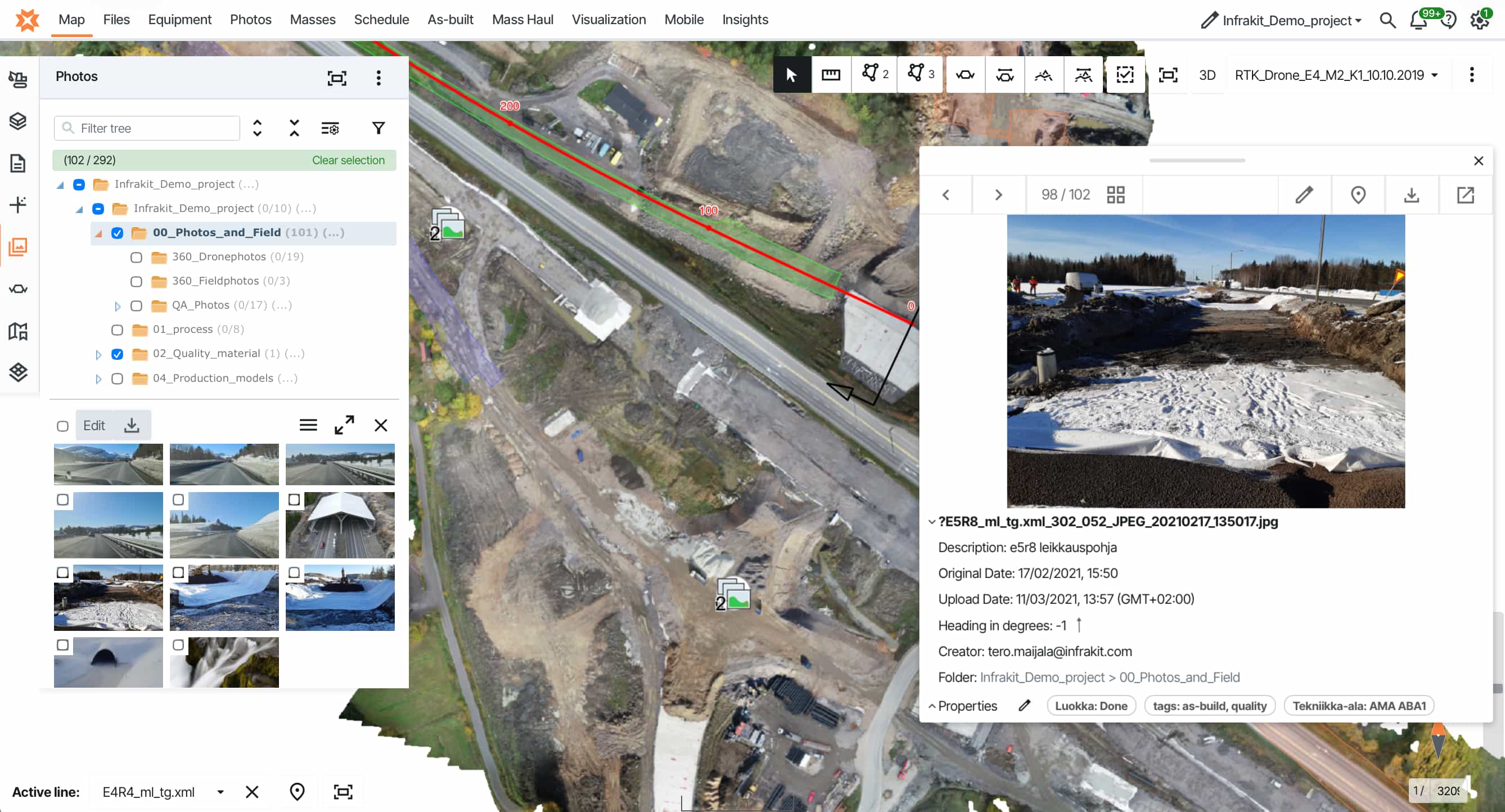
What a common data environment actually looks like on large infrastructure projects — how it connects machine control systems, field teams, and project owners in one live environment, and how contractors in Norway, Finland, and Hungary have used it to deliver projects earlier and under budget.
Ask anyone who runs a large infrastructure project what keeps them up at night, and the answer is rarely the physical engineering. The structures, the materials, the machines — those are hard, but they are knowable. What keeps contractors awake is whether everyone on the project is working from the same information.
A design change issued on Tuesday. Did it reach the machine operators on Wednesday? Did the subcontractor who arrived on Thursday know about it, or did they spend a day excavating to the wrong depth before anyone noticed? Did the quality inspector signing off on Friday have access to the updated specification, or the one from three weeks ago?
These are not edge cases. They are the everyday reality of infrastructure projects managed through fragmented systems — email threads, shared drives, USB sticks, separate portals for each equipment brand, paper drawings that travel around a site and get wet, torn, and lost. The cumulative cost of this fragmentation, in rework, delays, and disputes, is enormous.
A common data environment (CDE) is the answer the industry has found. One centrally managed digital environment where all project data — designs, models, documents, photos, as-built records, quality certificates — is stored, versioned, and accessible to everyone who needs it, in real time. People and machines working from the same platform, with complete clarity over what is current, what has been built, and what still needs doing.
The principle sounds simple. In practice, it changes everything about how projects are run.
What is a common data environment?
A common data environment is a shared digital workspace that serves as the single authoritative source of project information for everyone involved — designers, contractors, surveyors, machine operators, subcontractors, and project owners.
Without one, every project party manages their own slice of the data. Designers in one system, contractors in another, quality reports filed by whoever happened to write them, photos on personal devices with no location attached. Each party has a piece of the project picture. Nobody has all of it.
A CDE changes that structure. Rather than data living in silos, everything flows into one platform. Access is role-based: a machine operator sees the models loaded to their machine. A project owner sees progress reports and quality documentation. A designer sees as-built measurements alongside their current design. All from the same environment, simultaneously.
For infrastructure specifically, a CDE is not just a document store. It is map-first — all data is anchored to the physical location it describes. Instead of navigating folders, you navigate the project. Tap a location on the map and see everything associated with it: designs, photos, measurements, inspection notes. On a 25-kilometre highway or a 23-kilometre tram line, that distinction matters enormously.
ISO 19650 sets the standard. But the practical meaning is straightforward: one place where everyone always works from current information. On a live infrastructure project, a CDE holds considerably more than documents:
- >3D design models and surface data (IFC, XML, DXF, DWG), distributed to machine control systems and viewable by all parties
- >Version-controlled drawings — everyone always works from the current file, previous versions automatically archived
- >Georeferenced photographs and as-built measurement data from machines and GNSS rovers, flowing in real time
- >Drone orthophotos and point clouds providing regular snapshots of site progress — see our complete guide to drone mapping for construction →
- >Quality documentation linked to exact locations — inspection reports, material certificates, tolerance records
- >Handover packages built continuously throughout construction — not assembled retrospectively at project end
For a deeper look at how machine control systems connect to a CDE, see our guide to managing multiple machine control systems →
Version control for construction sites with multiple machine brands
Version control is the most underappreciated element of construction data management. Everyone understands that working from an outdated drawing is bad. The problem is that the systems used to prevent it are often inadequate — and the consequences are expensive.
Here's how it typically goes. A designer issues revision 3 of a road alignment model. Two days later, revision 4 addresses a clash. Some machines now have revision 3, some have revision 4. Nobody is certain which. An email goes out. Three operators reply. Two don't. That uncertainty — not the design change itself — is where the cost comes from.
In a CDE, it works differently. When a new file is uploaded, the previous version is automatically archived. Every connected machine, every site manager's tablet, every client's browser view shows the current revision. No email chase. No physical checks. No guessing.
Veidekke, Norway: From six portals to one
The E6 Arnkvern–Moelv motorway in Norway — 25 kilometres of four-lane highway, valued at €245 million — shows what this means at scale. Veidekke had six machine control brands on site simultaneously: Leica, Novatron, Makin3D, DigPilot, Trimble, and Topcon. Each had its own cloud portal. Every model update had to be published to each system separately. Every operator had to be checked individually. The risk of someone working with an outdated model was constant.
"Using Infrakit, we only need one platform for data transfer, and not six, as we normally would have." — Jan Steinar Stein, Survey Manager, Veidekke E6 Arnkvern
With a CDE in place, model updates happen once and distribute automatically to every brand. When a discrepancy is found anywhere on the 25-kilometre site, it is pinned to its exact map location and immediately visible to everyone — from site crew to project director. "The best thing is that we have that overview of the machines, and that we have the opportunity to easily send out data and make sure that everyone works on the right basis. That is the biggest advantage." — Terje Glad, BIM Manager, Veidekke E6 Arnkvern
Surveying data is another critical input to the CDE. See how construction surveying and as-built documentation works when it flows directly into a shared platform.
"The best thing is that we have that overview of the machines, and that we have the opportunity to easily send out data and make sure that everyone works on the right basis. That is the biggest advantage."
Terje Glad BIM Manager · Veidekke E6 Arnkvern–Moelv (€245M, 25km, 6 machine brands)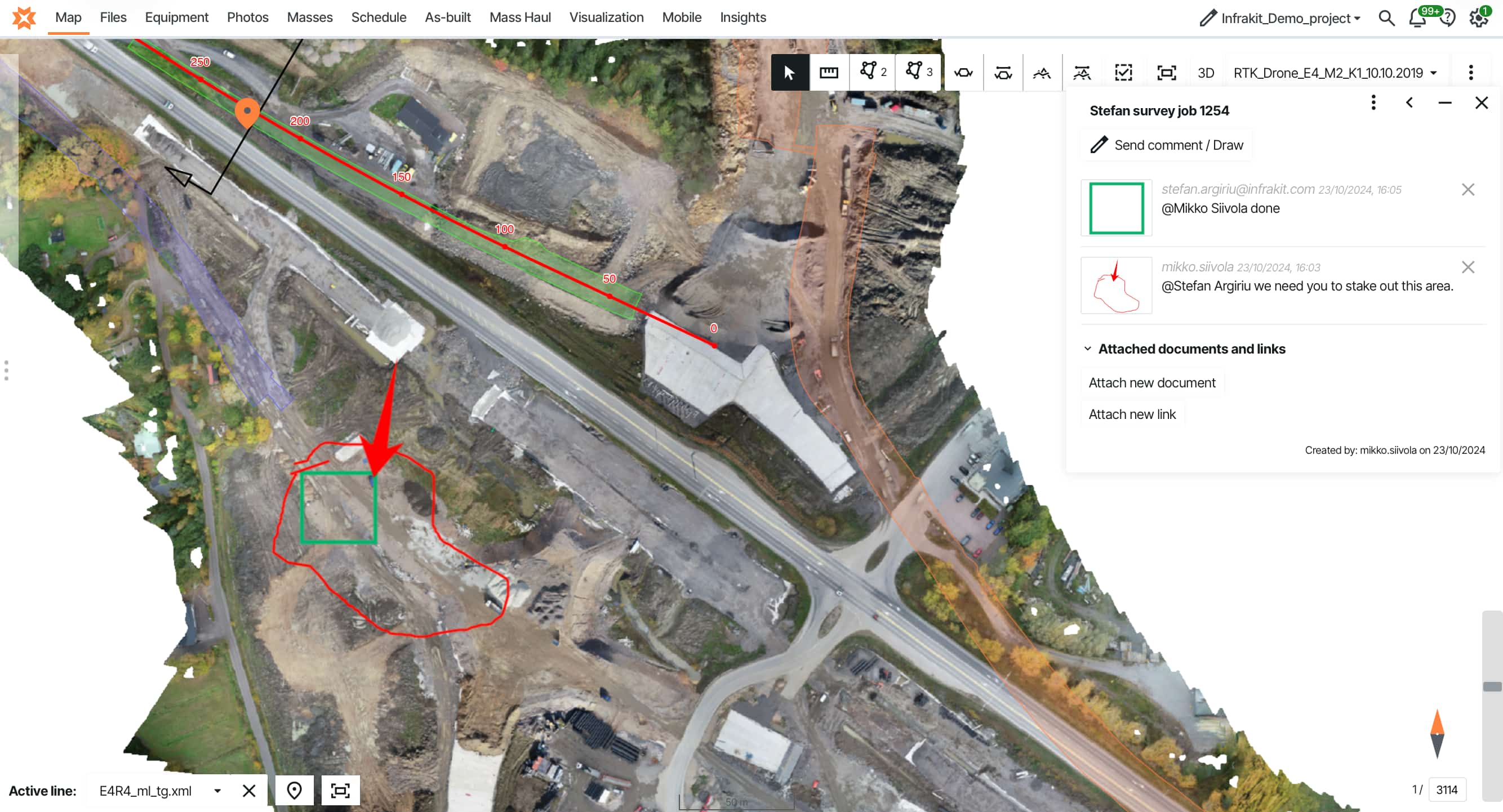
What to look for in a common data environment for infrastructure
Not all CDE software is built for construction — and within construction, not all of it is built for infrastructure.
Generic platforms like SharePoint or Google Drive can be configured to serve some CDE functions, but configuration is not the same as capability. They lack native support for the formats, workflows, and field conditions that infrastructure projects demand, and teams end up spending more time working around the platform than working with it.
Format support is the starting point. Infrastructure projects produce XML, IFC, DXF, DWG, LAZ point clouds, and georeferenced images — the platform needs to handle all of them natively. If your surveyor has to convert files before uploading, or your machine operator can't load a model because the format isn't supported, the CDE creates friction instead of removing it.
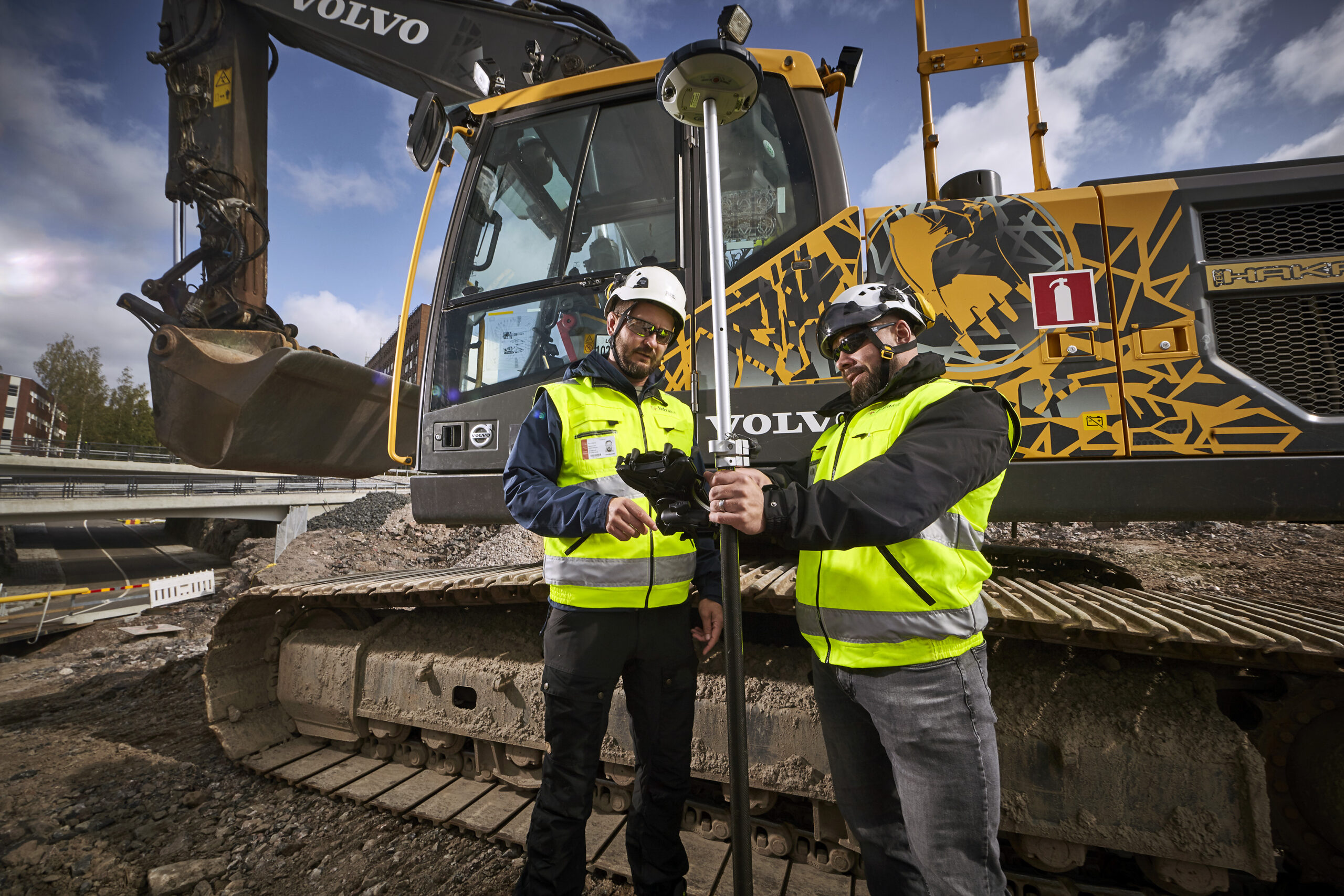
Machine control integration is where most generic platforms fall short entirely. On any large infrastructure project, as-built data flows continuously from GPS-guided excavators, dozers, and graders. That data should reach the CDE automatically — not through a manual export-and-upload process that someone has to remember to do. This requires direct API connections to Trimble WorksManager, Leica ConX, Topcon Sitelink 2, Novatron Xsite, and others.
Mobile access matters more than most evaluations acknowledge. A platform that works well on a desktop but becomes clunky on a phone in the field will not get used in the field — which defeats the purpose.
The organising principle matters. Folder-based systems work for offices. Infrastructure projects are geographic — the natural way to find information is by location, not by navigating a folder hierarchy. A map-first CDE, where every piece of data is anchored to its physical location, is fundamentally more useful.
- >Native XML, IFC, DXF, DWG, LAZ support — no conversion required
- >Direct API connections to all major machine control brands
- >Map-first organisation — navigate by location, not folder
- >Mobile-first field access — works on phones in actual site conditions
- >Role-based access flexible enough to serve operators, surveyors, owners
- >No IT configuration required to add users or adjust permissions
See Infrakit's CDE in practice on infrastructure projects
Machine control, survey data, drone imagery, field documentation, and quality records — map-first, accessible to every project stakeholder, connected via direct API to every major equipment brand.
"Now we have one place where we can find all the information. The information is up-to-date and the whole process is a lot faster. Materials can be compared directly without separate applications."
Teppo Viinikka Head of Surveying · Tampere Tram Alliance (23km, €37.5M below target cost)


Why a CDE makes project handover easier
Not all common data environment software is built for construction — and within construction, not all of it is built for infrastructure. Generic platforms like SharePoint or Google Drive can be configured to serve some CDE functions, but configuration is not the same as capability. They lack native support for the formats, workflows, and field conditions that infrastructure projects demand, and teams end up spending more time working around the platform than working with it.
When evaluating CDE software for infrastructure, the starting point is format support. Infrastructure projects produce XML, IFC, DXF, DWG, LAZ point clouds, and georeferenced images — and the platform needs to handle all of them natively. If your surveyor has to convert files before uploading, or your machine operator can't load a model because the format isn't supported, the CDE creates friction instead of removing it.
Machine control integration is where most generic platforms fall short entirely. On any large infrastructure project, as-built data flows continuously from GPS-guided excavators, dozers, and graders. That data should reach the CDE automatically — not through a manual export-and-upload process that someone has to remember to do. This requires direct API connections to the major machine control brands used across European infrastructure: Trimble WorksManager, Leica ConX, Topcon Sitelink 2, Novatron Xsite, and others. Without it, your as-built record is always incomplete and always behind.
Mobile access matters more than most software evaluations acknowledge. Site staff access the CDE on tablets and smartphones across the project alignment. A platform that works well on a desktop but becomes clunky on a phone in the field will not get used in the field — which defeats the purpose.
The organising principle of the platform also matters. Folder-based systems work for offices. Infrastructure projects are geographic — work happens at specific locations along an alignment, and the natural way to find information is by location, not by navigating a folder hierarchy. A map-first CDE, where every piece of data is anchored to its physical location on the project, is fundamentally more useful than one built around documents and directories.
Finally, role-based access needs to be genuinely flexible. A CDE on a large infrastructure project serves machine operators, site engineers, surveyors, subcontractors, designers, and project owners — all with different information needs and different levels of access. A platform that can't accommodate this without complex IT configuration will either be locked down too tightly or left too open.
None of this is abstract. At the end of every project, it comes down to one question: can you prove what was built, where, and when?
Download: 10 Steps to Deliver Infrastructure Projects On Time & On Budget
Learn from teams on the Tampere tram, Norway's E6 highway, and Austria's A9 motorway — including how they implemented CDE workflows across design, construction, and handover.
How to roll out a common data environment across your organisation
The CDE eliminated the separate-portal problem entirely. Discrepancies pinned to their exact map location, visible to everyone from site crew to project director within minutes of being flagged.
"Using Infrakit, we only need one platform for data transfer, and not six, as we normally would have."
Jan Steinar Stein Survey Manager · Veidekke E6 Arnkvern–Moelv~2,500 documents, 1,000 information models, 25,000 surface measurements all accessible to every alliance member. Handover was a formality — the package had built itself throughout construction. Nothing at handover was a surprise to the client.
Adoption is deliberately bottom-up. Two-day workshops combine formal training with informal conversation. When a project is identified as an Infrakit project internally, everyone already knows what it means: BIM approach, machine control, different reporting, data-driven coordination meetings.
"We are introducing things into everyday practice that provide a competitive advantage — and also benefit individuals: less overtime, calmer work."
Dávid Kathy BIM Manager · Colas Hungary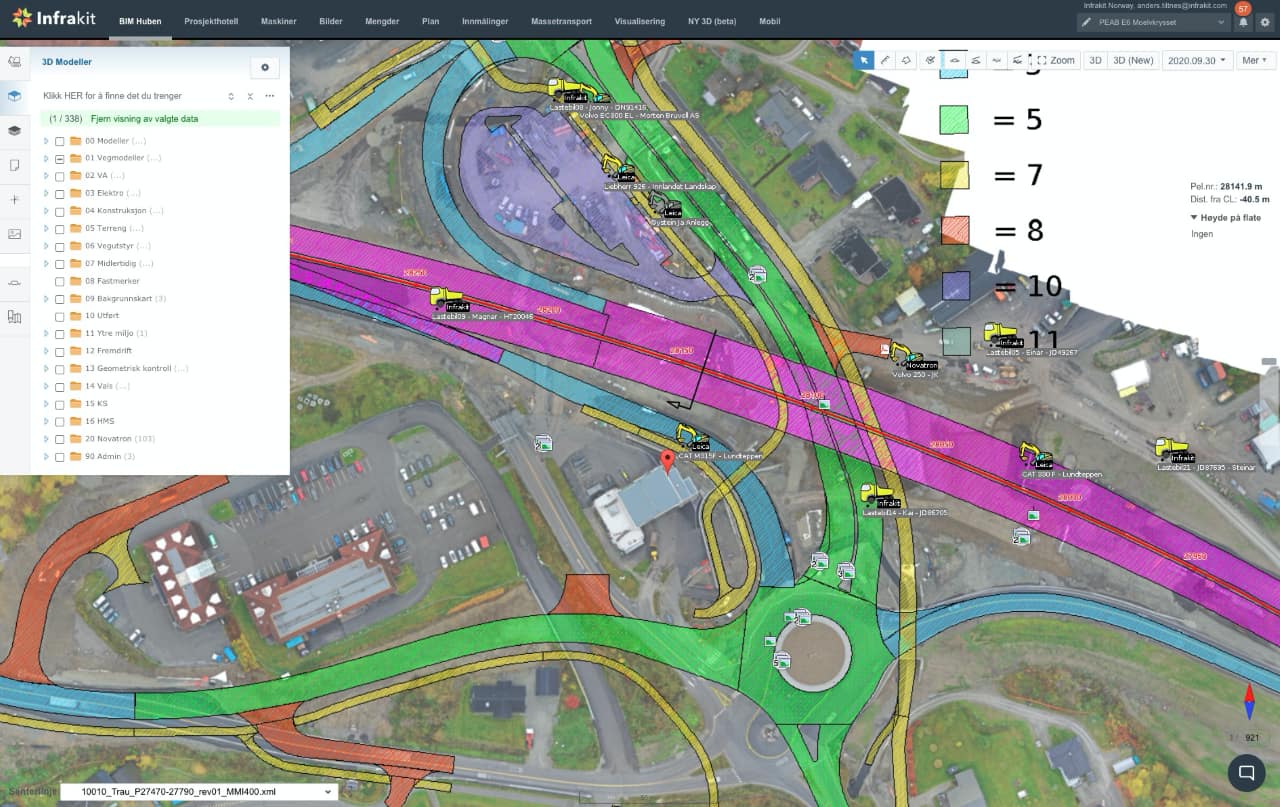
The technology behind a CDE is well understood. What determines whether an implementation succeeds is whether people actually use it — consistently, across every company, discipline, and level of digital confidence involved in a project. A system that some people use and others don't is not a common data environment. It's just another silo.
The earlier in the project the better — but teams that adopt mid-project simply route new data through the platform while existing workflows wind down naturally. Connect your machines first. For contractors running machine control, that is where the value is immediate and visible. Get the client on the platform early. When the project owner has real-time visibility into quality documentation, disputes at handover largely disappear.
On the numbers: a surveyor managing multiple machine control portals manually loses 15–20 hours per week to overhead that produces nothing. On a fixed-price contract, that cost is yours. The teams that embed CDE practice successfully describe the same pattern: find the people who get it, let them demonstrate value to the people who don't, and make it about making individual jobs easier — not about compliance.
Three projects. Three countries. The same result.
Three projects. Three countries — Norway, Finland, Hungary. Three different contracting models. The same result: better outcomes when everyone — people and machines — worked from the same platform. Earlier completions. Lower costs. Handovers without the last-minute scramble. The technology has matured. The integrations are there. What remains is a decision.
For infrastructure owners, specifying a CDE in procurement is not just a digital ambition — it is a practical risk management tool that improves the likelihood of projects finishing on time, within budget, and with complete, retrievable documentation. For contractors, teams working from a single, current data environment make fewer errors, resolve problems faster, and hand over better packages. In a sector where margins are thin and disputes are expensive, those advantages compound over time. And as Colas Hungary found, the day-to-day work gets calmer too.
The question is no longer whether to implement a common data environment. It's how to do it well — which platform, which project to start with, and which people to bring along first. Infrakit is a cloud-based CDE built specifically for infrastructure — connecting machine control, survey data, documents, photos, and quality records in one map-first platform, accessible to every project stakeholder in real time. Request a demo →
Frequently asked questions | What is a common data environment in simple terms? What is the difference between a CDE and a document management system? Is a CDE the same as BIM? How does a CDE handle multiple machine control brands on the same project? When should a CDE be set up on a project? How long does it take for field teams to adopt a CDE? Does a CDE replace the machine control systems already on site? What happens to project data after construction ends? |