
Highlights
- Bottom-up digitalization: building adoption from site teams upward, not by mandate.
- Infrakit as the “center” platform: one map-based workspace connecting BIM, machine control, site reporting, and collaboration.
- Proven project outcomes: stronger road quality (verified by measurements), faster delivery (e.g., ~1 month saved on Szeged Science Park), and smoother coordination on large-area jobs like wastewater networks.
A trailblazer mindset: digitalization as a competitive edge
Colas Hungary (part of the wider Colas Group) is an umbrella organization of roughly 1,000 employees covering road construction and rehabilitation, utilities and special engineering, and materials/mining operations.
From the outside, “digitalization” can sound like new software. Inside Colas, it’s treated as a company-wide capability—built through habits, trust, and a consistent operating model.
“We are almost pioneers,” says Máté Szabó, BIM Coordinator at Colas, describing the company’s journey in Hungarian infrastructure construction. “It’s driven by gaining competitive advantage and increasing efficiency.”
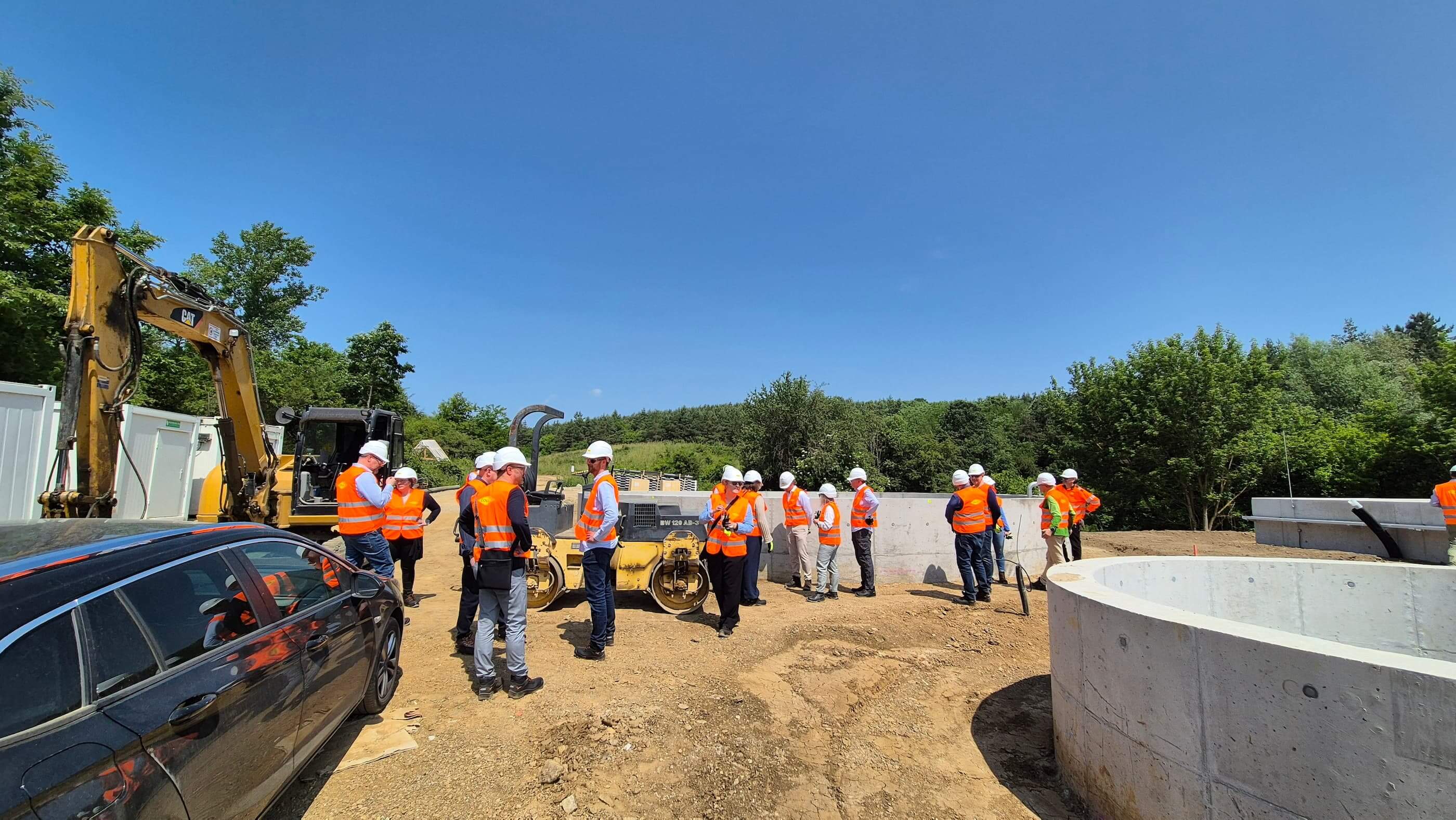
Team on a site visit, Image Credit: Colas
That ambition is paired with realism: the best tools don’t matter if adoption fails. Colas’ approach deliberately focuses on change management, training, and practical value on-site—so digital workflows stick.
“I believe in building from the bottom up,” adds Máté Szabó. “If first there is acceptance, it will spread upward. Top-down orders often breed resistance.”
From experimentation to a scalable system
Digitalization at Colas Hungary didn’t happen overnight. The early years were about testing, learning, and identifying where digital workflows truly move the needle for the business and for people in the field.
“Five years ago, when the BIM group was formed… the big question was how,” says Dávid Kathy, BIM Manager at Colas. “The first few years were spent testing and experimenting… and this is how the modernization and digitization of work processes became a key factor.”
That foundation became even more critical as external pressures increased—tighter margins, rising input costs, and higher client expectations. Colas needed repeatable ways to protect quality and productivity at scale.
“We don’t only develop the technology, but also the people,” Dávid Kathy continues. “We shape our strategy by taking direct feedback into account.”
Why Infrakit: “in the center of digitalization”
When Colas evaluated tools for a Common Data Environment (CDE) and BIM-enabled execution, they weren’t looking for a generic document store—they wanted something designed for construction reality.
“Infrakit was maybe the only one who could give us a complex solution that we actually need… for the construction needs… for the constructors,” says Dávid Kathy.
Colas describes Infrakit not as “one more tool,” but as the platform that ties workflows together across office and site.
“In the center of this,” Dávid Kathy explains. “When people hear that we should use Infrakit on a project, they understand: this will be a BIM-approached project… with machine control… different reporting… subcontractor requirements… and using data in cooperation meetings.”
That “center” role also influenced adoption: Infrakit became the signal for a consistent way of working.
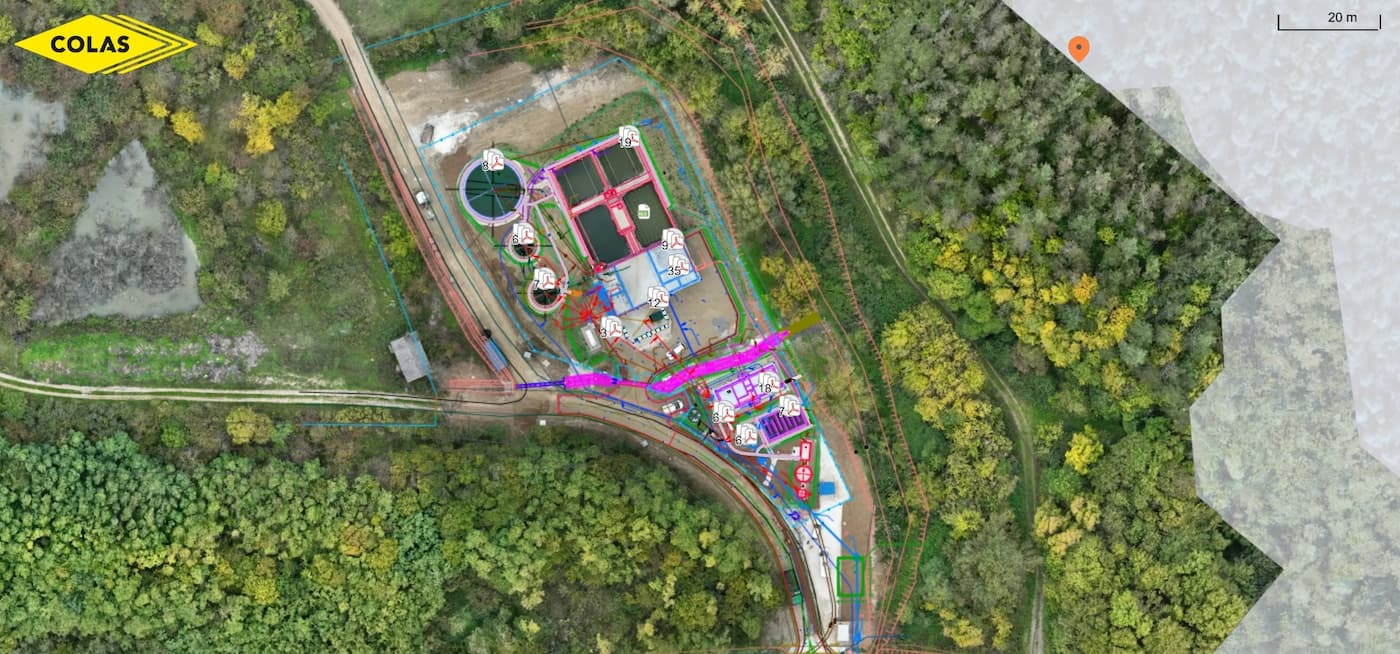
Infrakit map – Tolmacs-Retsag-Bank, Image credit: Colas
Adoption strategy: trust, champions, and peer-to-peer learning
Colas learned early that picking a “big project with big savings potential” is not enough—success depends on who is on the project and whether they believe the approach will help them.
“We found out… people are the key,” says Dávid Kathy. “I can bring the best machines… if people won’t accept it… it won’t work.”
So Colas built adoption through:
- Identifying open-minded early adopters (“champions”)
- On-site support (not “from the office tower”)
- Structured training that builds trust, not just skills
“On-site presence and support—reassuring them that they won’t be left alone with digitalization; we’re here to help,” says Dávid Dörgő, BIM Coordinator at Colas.
And Colas’ now-signature training format is deliberately human:
“The real trust builds… after the training… in these informal moments,” Dávid Dörgő says of their two-day BIM & Digitalization workshops. “It’s key to not just trust the system, but also the guy who tells you to use this.”
What changed on projects: faster decisions, clearer coordination, less friction
Across roles—from BIM and engineering to foremen and site managers—teams point to the same shift: instant access to up-to-date project information in one shared map context.
“It improves communication between site and office staff,” says Dávid Dörgő, highlighting how quick access to imagery and current data speeds up situation awareness.
Alterra team (site perspective) summarizes the impact simply: “On-site staff get immediate access to design data… which supports collaboration and makes the construction process more transparent.”
The practical daily workflows show up consistently in responses:
- Geotagged photos and field logging
- Site organization / logistics drawings from the office based on the live plan
- Quick identification of structures and utilities
- Model and plan viewing in the Field app
“It made field logging easier, simpler, and more transparent,” says Márk Zámbó, Project Leader at Colas. “It works especially well for more linear facilities.”
“For creating organization/logistics drawings and uploading site photos,” adds István Vas, Site Manager at Colas. “These have helped our work a lot.”
From utilities and exposure work, Norbert Demsa, Site Manager at Colas, highlights another tangible benefit: “Colleagues could locate certain structures and manholes more easily… documentation was easier and faster when exposing crossing utilities.”
And from a subcontractor surveyor angle, Péter Szántai, Survey Subcontractor emphasizes coordination value for stakeout and execution alignment: “Site identification and quick access to plans for a given area” reduces paper-based administration and speeds decisions.
Results Colas is proud of
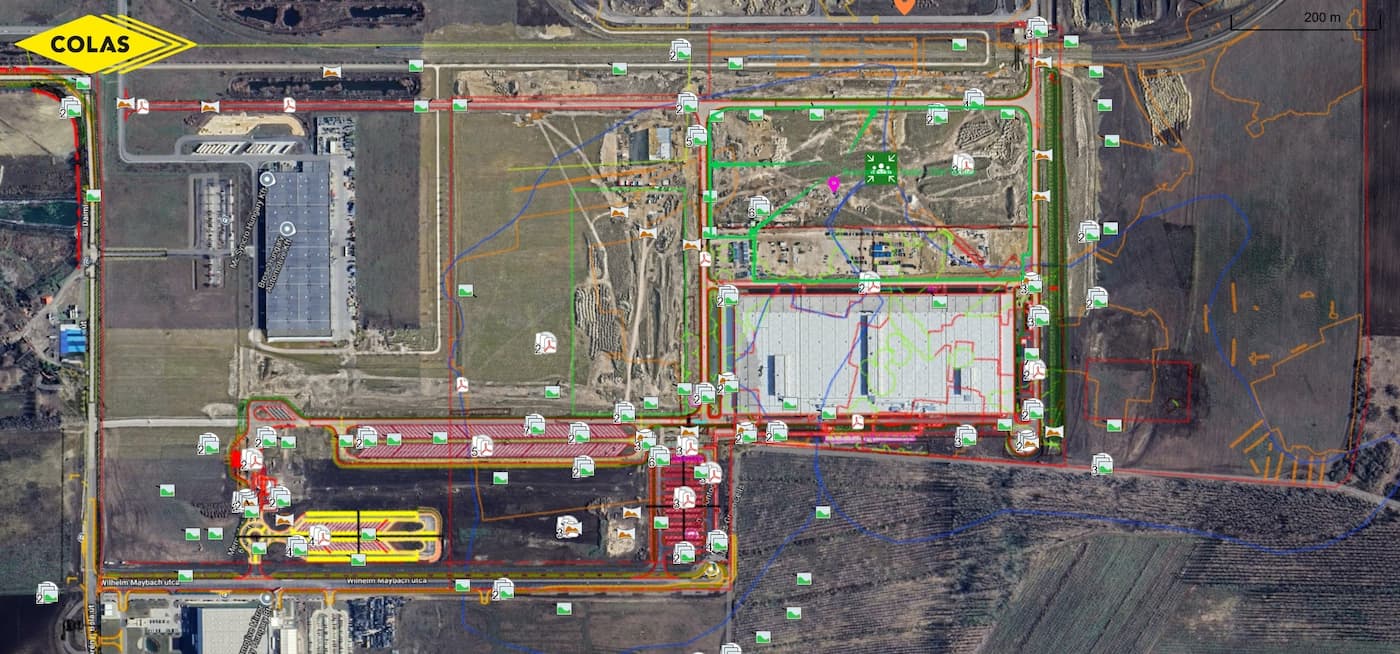
Infrakit map – Mercedes Kecskemét project, Image credit: Colas
Colas shared multiple project examples where Infrakit-supported workflows translated into measurable or clearly observable outcomes:
- Road rehabilitation projects: “really, really good road quality… proven by numbers with measurements,” as David describes.
- Szeged Science Park: approximately one month saved on schedule to finish the road part ahead of time.
- Budapest Airport projects: where a CDE and BIM approach were mandatory—Colas teams delivered within those requirements.
- Large wastewater project spanning three towns and a treatment plant: Infrakit helped teams orient and manage work over a physically large area where “finding yourself” and project borders becomes difficult in traditional paper-based work.
- Mercedes factory projects: starting with one project, then winning more work after demonstrating execution quality and working culture.
Colas leadership also used these successes to demonstrate value internally and across the broader group—including regional/global stakeholders visiting to see achievements.
Digitalization goals: not just speed—also quality, cost, and people
Colas frames optimization broadly: time, cost, quality, and “people satisfaction”—because burnout and frustration are real hidden costs on projects.
“We are introducing things into everyday practice that provide a competitive advantage… and also benefit individuals: less overtime, calmer work,” says Dávid Kathy.
That dual focus—performance and working conditions—shows up repeatedly, and it’s one reason Colas is seen internally as “ahead of the average.”
“With a lot of work… we are among the top performers even within Colas’s European subsidiaries,” adds Gábor Dankó.
Looking ahead: scaling skills, not just licenses
Colas’ next chapter is about scaling capability: turning early adopters into a wider “advanced user” group, their internal “BIM Pioneers”, and expanding training into a structured year-long program.
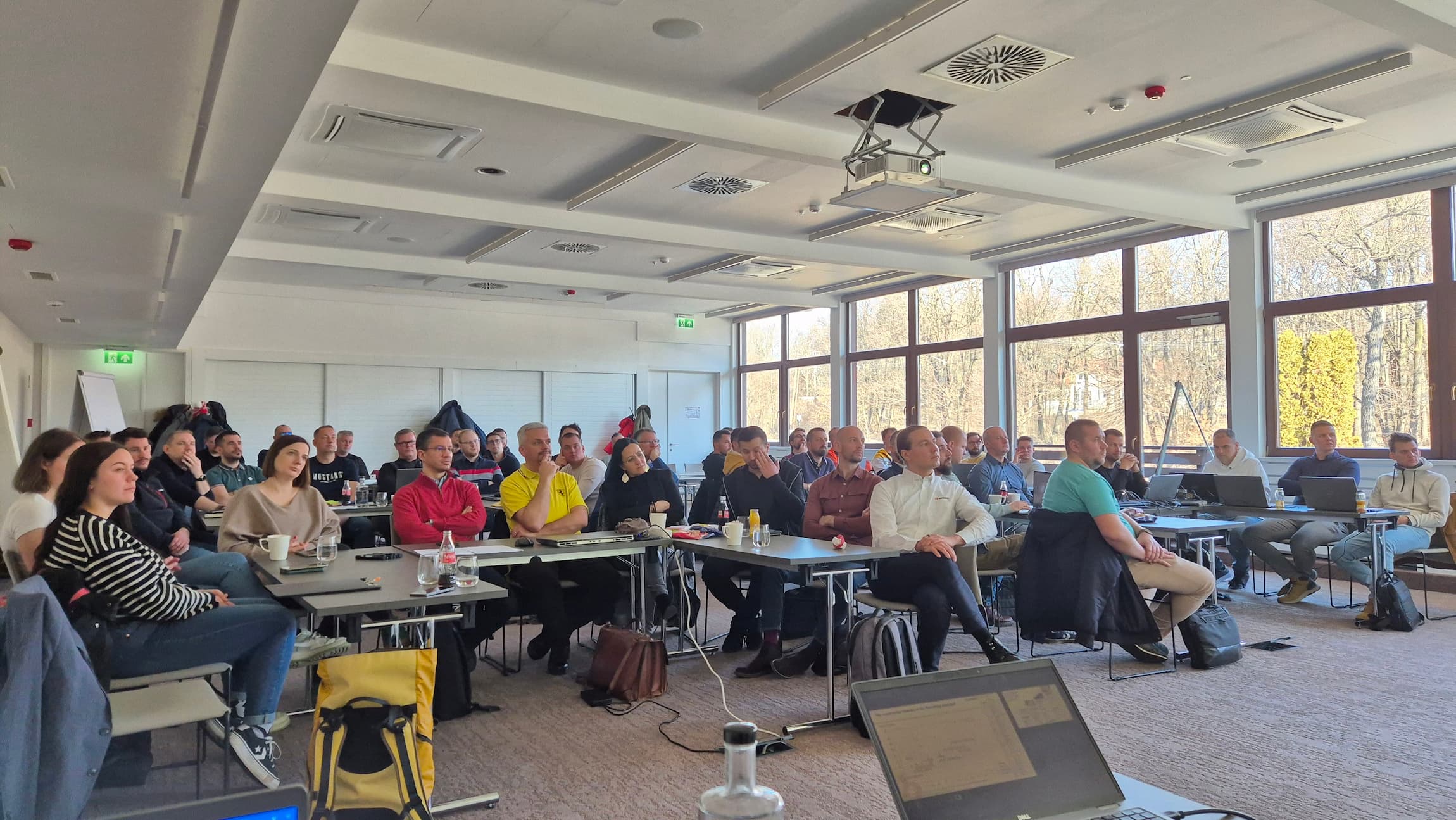
Colas and Infrakit BIM and digitalisation workshop, Image credit: Colas
From the field, Dániel Ivády, Foreman at Colas points to what matters for that scale: foremen actively using the app, sharing visual updates, and enabling faster support from office teams.
And Colas sees the competitive stakes clearly:
“Those who don’t develop their internal workflows… will end up at an unmanageable competitive disadvantage,” says Dávid Kathy.
Thanks to the interview contributors
- Kathy Dávid – BIM Manager at Colas
- Dörgő Dávid – BIM Coordinator
- Szabó Máté – BIM Coordinator
- Zámbó Márk – Project Leader
- Vas István – Site Manager
- Demsa Norbert – Site Manager
- Mózes Tamás – Site Engineer
- Szánta Peter – Survey Subcontractor
- Colas Alterra team
- Dankó Gábor – BIM Coordinator
- Ivády Dániel – Foreman
- Molnár Ferenc – Site Manager